Art No | INSERTS-PC
Tissue Culture Plate Inserts - PC (Polycarbonate)
from 72.00 CHF


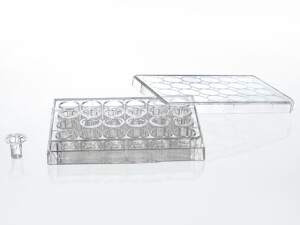
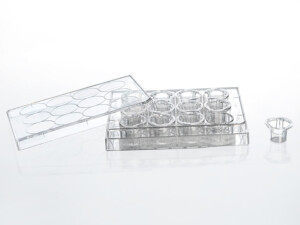
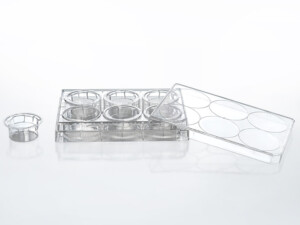
Tissue culture plate inserts are widely used in various cell-based assays, including co-culture, chemotaxis, and cell migration studies. Their membrane technology enables in vitro cell growth that closely mimics in vivo morphology and function, also making them valuable for studying cell functions like transport, absorption, and secretion.
Material
Chemical Compatibility
Both PC and PET membranes are compatible with histological fixatives like methanol and formaldehyde, as well as alcohols, amines, lipids, ethers, ketones, and petroleum solvents (including halogenated hydrocarbons and DMSO). The PC membrane exhibits particularly good chemical resistance. However, use with strong acidic and alkaline solutions is not recommended.
Pore Density
Both PET and PC membranes have a specified pore density. The PET membrane has a lower pore density compared to the PC membrane but offers superior optical clarity.
Central Suspension Design
The central suspension design of our tissue culture plate inserts creates a gap between the insert and the bottom of the well. This prevents damage to monolayer cells when the insert is moved and minimizes culture medium loss due to capillary action between the insert wall and the well wall.